










There are a lot of real estate investors in the world today. A great deal of them pour their heart, soul, money, and years of their lives into this endeavor and get nowhere.
At the same time, a select few have made it HUGE in the business of real estate. They hit one grand slam after another, month after month, year after year.
Being a real estate blogger, I've been fortunate enough to cross paths with some of these individuals from time to time. I recently reached out to some of these friends and acquaintances and asked them what they thought about this particular issue.
Specifically, this is what I asked them:
- Why are some real estate investors more successful than others?
- What are successful investors doing that unsuccessful investors need to learn from?
As you'll see, there were some differing opinions on what the most pressing issues were, but there was also a common theme regarding the areas where new investors tend to struggle.
Here they are (in no particular order):
Chris Clothier, Brian Burke, Claude Diamond, Steve Cook, Preston Ely, JP Moses, Shaun McCloskey, Justin Lee, Joshua Dorkin, Robert Griswold, Ali Boone, Frank Gallinelli, Marty Boardman, J Scott, Brandon Turner, Danny Johnson
Joshua Dorkin
FOUNDER & CEO of BIGGERPOCKETS.COM
 “I believe that there are a few important factors that contribute to successful investors making things happen and standing out above others. Most importantly, those investors, over the long haul, are the ones who are focused on learning. Real estate and the economy are dynamic things, and in order to remain successful over time, you need to understand how things work, what's changing, and you must be flexible enough with your strategies to adapt. That takes knowledge in various buying and exit strategies. Winging it may sound like a good way to proceed, but rarely results in long-term success. The successful investors are also running their real estate investments as a business; they manage their portfolio and strategies with a formula and with a definite plan. The vast majority of investors that I see leaving the business do so because they were bound to fail from the start due to a lack of planning and education. There is definitely some luck involved, but you can't build an empire on luck… the more of the other factors that line up in your favor, the better your luck, I believe.”
Follow Joshua on Twitter or learn more at BiggerPockets.com
Steve Cook
INVESTOR, REHABBER, AUTHOR, SPEAKER, COACH
 “Those that take the ‘right' actions vs. those who take the wrong actions, or no action at all.
“Many appear to be passionate and giving their all, but they don't do the things that make investors money. Instead, they're looking for the next pill, the magic formula, or the better idea rather than simply employing tried and true methods of investing. Many simply make excuses. As a teacher, I've heard them all. I've been told hundreds of times why what I do won't work, and people really try to convince me of it. That leads me to believe that the actions we take are dictated by what we believe. If you don't believe it will work, then you'll not take the actions that will actually produce results, and if you do believe that it works, you're going to take the actions that will produce results.
“No matter how you cut it, it's a mind game, and many people simply get in their own ways.”
Follow Steve at LIFEonaire.com.
Robert Griswold
BESTSELLING AUTHOR, PROPERTY MANAGER
 “Successful investors realize that location is only the first step in evaluating the optimal rental real estate property for them. An equally important step is to understand and excel at the important aspects of property management, specifically the product preparation, marketing, advertising, tenant selection, and rent collection. You do this by either mastering these skills yourself and self-managing a property in your area, or by hiring a professional property management company that exclusively works with owners like yourself and does not get involved with sales.”
Check out Robert's book Property Management Kit for Dummies and learn more about his property management company at GriswoldREMgmt.com
Claude Diamond
INVESTOR, AUTHOR, MENTOR, COACH, SALES EXPERT
 “Hunger.
“Max, my mentor, said it best: ‘Everyone wants to become rich but few are willing to pay the price.'
“The price was not money but the desire or hunger to excel. To learn the strategies and sales skills necessary to make as much as you want, whenever you want without any need of personal financial resources.
“Very few are willing to pay that price. Very few have that hunger.”
Follow Claude on Twitter or learn more at ClaudeDiamond.com
Shaun McCloskey
INVESTOR, SPEAKER, COACH, MENTOR
 “The biggest difference between those who are successful and those who aren't can almost always be boiled down to one sentence. ‘You must become consistent in being a massive action taker.'
“The students I have that are doing really well don't spend six months planning out everything before actually taking action. They have a general idea of a plan and they start taking action. And not just a little bit of action, they take massive action… The successful ones also model others who are already successful. They don't try to reinvent the wheel because they think they have a better way. The truth is, they don't have a better way yet until they've committed to trying what we already know works. The way we know it works is to try it first, then decide… Finally, the successful ones are consistent with their efforts. I sometimes get students that say they tried my marketing techniques and they just don't work. When I dig a little deeper, I find out that they're saying it doesn't work because they tried to send out 20 mailers to motivated sellers in one day and they only got one call from their efforts. Since that phone call didn't turn into a deal, all of a sudden the marketing just doesn't work, so they never send direct mail again. This is ludicrous. Everything in business takes consistent results…
“The one sentence above pretty much sums it up. Consistent actions will get you there. But not only consistent actions… you must take the right actions. You can take all of the action in the world, but if you're doing the wrong things, you can still get bad results. Because of this, invest in your education. But don't overdo it either! You must take action on what you learn, otherwise, you'll end up being ‘that guy' who goes to every seminar in the country and never does a deal.”
Follow Shaun on Twitter or learn more at LIFEonaire.com
Preston Ely
INVESTOR, MARKETER, WRITER, SPEAKER
 “The investors who succeed are the ones who have trained their mind for success. They are very driven, goal-oriented, positive, strong, and ultra-determined. Their self-confidence is through the roof. The ones who don’t succeed are the ones who haven't taken the time to work on themselves or gain the necessary life skills to succeed at ANYthing, let alone real estate.”
Follow Preston on Twitter or learn more at PrestonEly.com
Justin Lee
INVESTOR, MARKETER, SHORT SALE & PRE-FORECLOSURE EXPERT
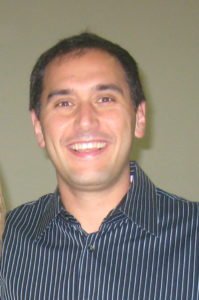 “Real estate investing, just like any other business, is all about lead generation.
“At the top of that list comes generating leads of motivated sellers; in other words, finding lots of great deals. After that comes generating buyer leads (cash buyers if you plan on wholesaling), and also leads from private lenders.
“Too many times I see students spending so much time and money on “getting educated,” that they have so much “book smarts” but have never spoken to a single seller in their life! Remember, if the phone doesn't ring, or you can't generate a lead, then you can't buy/flip a house and close a deal.
“If there's one thing all of the successful real estate investors do, they all have a lead machine cranking where they are constantly analyzing deals and making offers.”
Follow Justin on Twitter or learn more at REIMarketingTips.com
JP Moses
INVESTOR, REHABBER, BLOGGER
 “One of the biggest reasons so many investors ultimately die trying is because of their inner demons, plain and simple. Whether it's fear of failure, fear of success, analysis paralysis, feeling overwhelmed, lacking confidence, lack of fierce determination… fill in the blank with some form of self-sabotage, and you've got it for most folks.
“Sadly, mindset seems typically given a backseat or side-car at best to learning real estate tactics and techniques. But slaying those dragons of the mind is absolutely, positively, without any shadow of a doubt the most important thing any investor should learn to master, and the biggest difference between those who win big and those who never make it happen.”
Learn more about JP at REItips.com
Brandon Turner
SENIOR EDITOR & COMMUNITY MANAGER of BIGGERPOCKETS.COM
 “Luck. But I don't mean in the normal sense of the word. I truly do believe that luck is the driving force—after all, we were ‘lucky' to live in a country where all this is possible, lucky to have interest rates so low that cash flow is easy, lucky to have certain deals put in front of us. However, as the quote made famous by film producer Samuel Goldwyn, ‘The harder I work, the luckier I get.' I firmly believe that getting this luck comes down to putting oneself out there and making it happen. No one is going to get lucky in real estate while playing Call of Duty on a PS3. However, if you are engaging in the business and working your tail off, luck is bound to find you, followed by success.”
Follow Brandon on Twitter or learn more at BiggerPockets.com
Chris Clothier
INVESTOR, PROPERTY MANAGER, AUTHOR, MENTOR
 “I think it's important that investors have a bit of levity to their approach to investing. I'm not sure if there are any steps that make one investor succeed and another fail, but often the approach is different. Success takes time, focus, energy, hard work, and a little luck along the way. So often an investor who is struggling may either think it all luck that leads to success and discount the hours of education, toil, and effort or they will think that only the most connected and wealthy people are the ones being successful, which again discounts the fact that nearly every successful investor started out at the same spot. Rather than wondering why or how someone else found success, they simply went to work and followed the steps of successful investors before them.”
Follow Chris on Twitter or learn more at MemphisInvest.com
Frank Gallinelli
FOUNDER AND PRESIDENT of REALDATA® INC, AUTHOR, INSTRUCTOR, INVESTOR
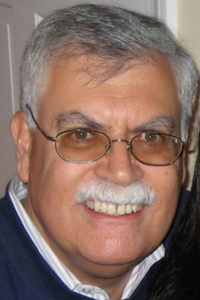 “From what I have been able to see, the first trait of successful investors is the same as for successful people in all endeavors: hard work… The second trait is one that truly separates the successful from the dreamers: preparation, or more specifically, a willingness to learn first and act second… Perhaps the final trait I would emphasize is the ability to identify and set investment objectives… I don’t doubt that there are additional characteristics that we could identify, but I believe that anyone who would focus on these three—a willingness to accept the reality that success requires hard work, a serious commitment to education, and the discipline to identify and pursue specific investment goals—should be well on their way to attaining success as a real estate investor.”
Learn more about Frank's company at RealData.com and check out his three books: Mastering Real Estate Investment, 10 Commandments for Real Estate Investors, What Every Real Estate Investor Needs to Know About Cash Flow
Danny Johnson
INVESTOR, REHABBER, BLOGGER
 “The biggest reason why some investors become successful while others can't seem to make any sort of headway is simply due to their mindset. I think successful investors had more of a reason to work hard enough to push through their fear and self-doubt and take action to get started. It's awfully easy to just stay in your comfort zone and keep learning while never really doing anything.
Among those that actually do take action and get started, I think the ones that make it realize and focus on the fact that it really is all just a numbers game. Get enough leads and you will get good deals. If you are having a hard time finding a deal, you aren't getting enough or looking at enough leads. Yes, it takes a lot, but it becomes easier as you gain experience. Be persistent and success is sure to follow.”
Follow Danny on Twitter or learn more at FlippingJunkie.com
Brian Burke
INVESTOR, BROKER, FORECLOSURE SPECIALIST
 “I think that some are unsuccessful in this industry because they are afraid to take the necessary steps to build to success. Instead, they just want it now! It is very rare to achieve instant success in this business, or in any other business for that matter. It takes time, experience, and track record to build a successful business. Along the way, there will be setbacks, and the people who eventually succeed are able to overcome these obstacles and use them to their advantage to leverage themselves into greater success. If you give up, success will elude you. Successful investors aren't greedy. Well, they are in a way, as fear and greed are the driving forces behind most investment transactions, but successful investors realize the value of sharing their success with others as a way to achieve scale. For example, I first built my track record, and next, I built my business. I took on capital partners and shared the wealth, which allowed me to achieve scale beyond my imagination. If I were greedy and wanted to keep it all for myself, I'd still be operating a much smaller business.”
Learn more about Brian's company, Praxis Capital, at PraxCap.com
Marty Boardman
INVESTOR, CO-OWNER, AND CFO of RISING SUN CAPITAL GROUP, LLC
 “Real estate investing is a business, not a hobby. Hobbies are expensive. The biggest reason people fail in real estate investing is they don't take it seriously. I consider houses a commodity. I'm like a stock market day trader, except the assets I buy and sell have four walls and a roof (hopefully). In order to succeed, I must have a complete understanding of the local housing market and the laws of my state and federal government. This requires spending time and money on education. Over the years I've invested thousands on books, CDs, and classes—covering topics from accounting to personal development. Real estate investing is a profession. Like doctors, accountants, and attorneys, I must remain up to date on the latest issues and trends in the industry.”
Follow Marty on Twitter or learn more at FlippingPhoenixHouses.com
Ali Boone
INVESTOR, BLOGGER
 “I think the difference between successful and unsuccessful real estate investors is what they do with the difficulties they encounter. Everyone is going to hit the same obstacles, but the successful investors challenge them, learn from them, and move past them while the unsuccessful investors assume they are stuck and quit.”
Follow Ali on Twitter or learn more at HipsterInvestments.com
J Scott
INVESTOR, REHABBER, BLOGGER
 “I believe there are two key characteristics of real estate investors who tend to be most successful:
“1. Successful investors *PLAN* their strategy upfront. While it doesn't need to be a formal business plan, the most successful investors will take the time to think about and write down their plan before they start investing. Not only does this help them generate a cohesive strategy before they jump in, it helps them answer a few basic questions early on, including:
- “Do I really even want to be doing this? I remember when I first started investing, I wrote a business plan for starting a large-scale rental company. By the time I finished the plan, I realized how much I *DIDN'T* want to be in that business.
- “How will I deal with the money situation? It's important to figure out how much you'll need, where you'll get it, what you'll do if you run out, etc. The biggest roadblock even successful investors eventually run into is cash flow problems—not having the money they need when they need it.
- “Where are my knowledge gaps? You don't know what you don't know. And by putting your plan down on paper, you'll be forced to ask yourself some questions you didn't even realize you needed the answers to.
“2. Successful investors spend as much time working *ON THEIR BUSINESS* as they do working *IN THEIR BUSINESS*. That means focusing on how to grow your company, scale your projects and make your business more efficient. While it's important to be involved in the day-to-day aspects of your investments, what will ultimately make your company successful is creating and implementing a longer-term strategy that will allow your business to grow and thrive.”
Follow J on Twitter or learn more at 123Flip.com
—
Now it's your turn.
I’d love to hear your answers to these questions in the comments section below.
(And if you’re new here, you can connect with me on Twitter or Facebook. Be sure to come back again soon and let me know how I can help you!)
Why do you think some real estate investors are more successful than others?